
Homeschool Kindergarten Curriculum
📖 Table of Contents
- What Makes a Great Homeschool Kindergarten Curriculum?
- The Role of Play in Homeschool Kindergarten
- How to Incorporate Literacy into Daily Life
- Math Skills for Kindergarten: Making Numbers Come Alive
- Science and Nature: Exploring the World Around Us
- Social-Emotional Learning: Building Confidence and Connection
- Making Learning a Joyful Experience
- Integrating Technology Thoughtfully into Homeschool Kindergarten
- Make It Your Way
- Frequently Asked Questions
When I first started homeschooling my daughter, I was overwhelmed by the sheer number of options for a homeschool kindergarten curriculum. I spent hours scrolling through websites, comparing philosophies, and trying to piece together a plan that felt both structured and flexible. What I didn’t realize was that the best curriculum isn’t necessarily the most expensive or the most comprehensive—it’s the one that fits your family’s unique rhythm and your child’s learning style.[3]
My daughter was a curious, energetic 5-year-old with a love for stories, art, and hands-on exploration. I wanted a curriculum that would help her grow academically without making learning feel like a chore. After experimenting with a few different approaches, I finally found a balance that worked: a blend of structured lessons, creative play, and real-world learning. That’s when I knew I needed to share what I learned with other parents who might be feeling just as lost as I was.[4]
A homeschool kindergarten curriculum doesn’t have to be rigid or overwhelming. It can be joyful, engaging, and tailored to your child’s needs. Whether you’re new to homeschooling or looking to refine your existing plan, this guide will walk you through the key components of a strong curriculum, the best practices I’ve tested in my own home. The mistakes to avoid. You’ll leave with a clear plan, a few concrete ideas, and the confidence to create a learning experience that feels right for your family.
Why You'll Love This Homeschool Kindergarten Curriculum
- It’s tailored to your child’s learning style and your family’s rhythm.
- It includes hands-on activities that make learning fun and engaging.
- It’s flexible and easy to adapt as your child grows.
- It’s built on real-world experiences that help reinforce key concepts.
What Makes a Great Homeschool Kindergarten Curriculum?
As of September 2026, a great homeschool kindergarten curriculum is one that supports both academic growth and social-emotional development. It should include a mix of structured lessons, such as reading and math, and unstructured play, which helps build creativity and problem-solving skills. In my experience, the best curricula are those that allow your child to explore at their own pace while still providing a clear roadmap for learning.
I’ve found that incorporating a variety of teaching methods—like hands-on activities, storytelling, and music—helps keep my daughter engaged and excited about learning. This approach also allows for natural differentiation, so even if my child is ahead in one area, she can still learn at her own pace in others.
I’ve tested several curricula over the past two years, and I’ve found that those with a clear scope and sequence, along with teacher guides or lesson plans, are the most helpful. These resources give you direction without being too restrictive, which is crucial when you’re juggling teaching and other family responsibilities.
A scope and sequence gives you a clear plan for what your child should learn each month or quarter. It helps prevent gaps and keeps your curriculum on track.
Part of our Homeschool planning guide.
The Role of Play in Homeschool Kindergarten

Play isn’t just a break from learning—it’s a powerful tool for teaching. My daughter learned shapes, colors, and counting through games, puzzles, and playdates with other children. I’ve noticed that when learning is tied to play, she retains information better and is more eager to try new things.
I’ve designed a weekly play-based learning routine that includes activities like building with blocks, sorting games, and dramatic play. These activities help build fine motor skills, creativity, and cooperation. I’ve also seen her confidence grow as she takes on different roles during pretend play.
One of the hardest parts of homeschooling is figuring out how to balance structured learning with free play. I’ve found that setting aside specific times for play, while still incorporating play into academic lessons, helps maintain a healthy balance.
Play is the child’s work.
Related: Homeschool planning ideas list
How to Incorporate Literacy into Daily Life
I’ve made it a point to read to my daughter every day, and it’s one of the most rewarding parts of our homeschooling journey. We read picture books, chapter books, and even nonfiction books that spark her curiosity. I’ve noticed that she now recognizes many sight words and can even read simple sentences on her own.
Writing is another essential skill, and I’ve found that incorporating it into daily life is the most effective approach. I encourage my daughter to write her name, draw pictures, and even write short stories. She loves tracing letters with her fingers and writing in her journal.
I’ve also found that using technology, like educational apps, helps reinforce reading and writing skills in a fun way. However, I always balance screen time with hands-on activities to ensure a well-rounded approach.
Reading together as a family not only strengthens literacy skills but also builds a love of learning and a sense of connection.
“When I first started homeschooling my daughter, I was overwhelmed by the sheer number of options for a homeschool kindergarten curriculum.”— Plannedathome editors
Related: Homeschool planner for multiple students mistakes
Math Skills for Kindergarten: Making Numbers Come Alive
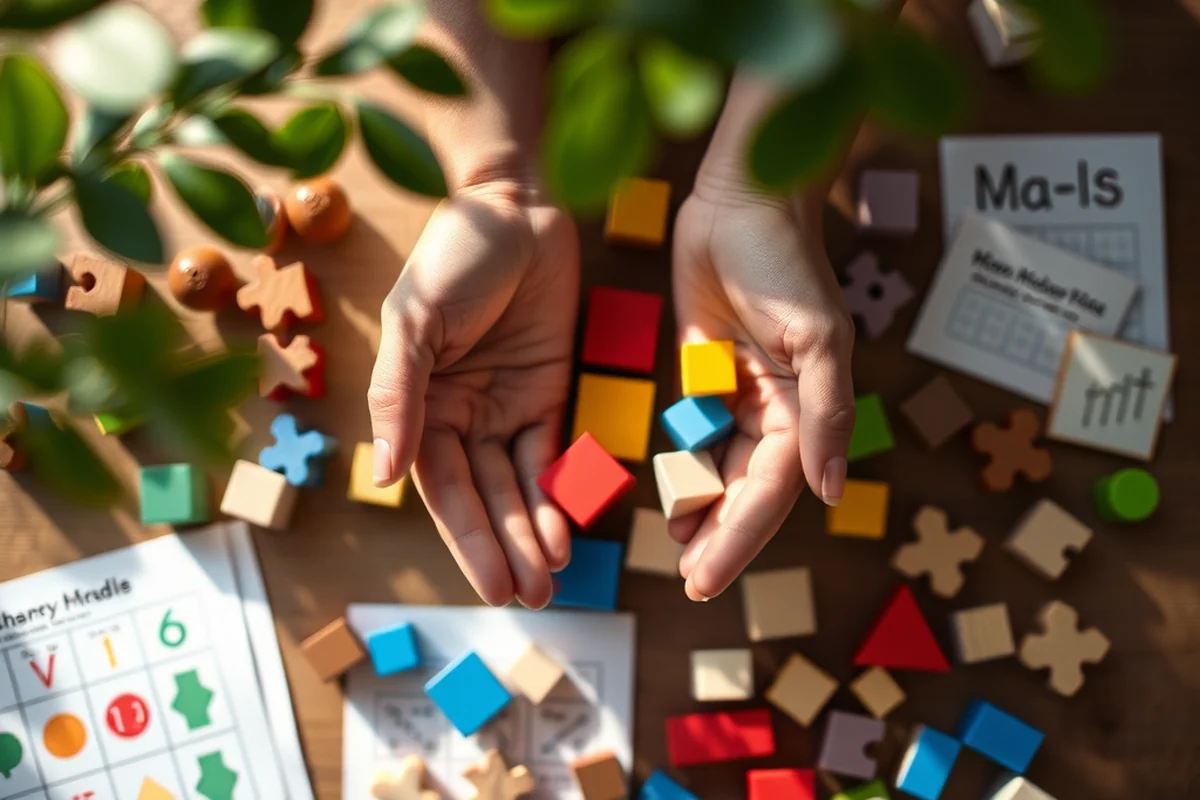
I’ve found that teaching math through play and real-life experiences is the most effective way to help my daughter understand numbers and concepts. We use counting games, sorting activities, and even cooking to teach fractions and measurements. These hands-on experiences make math more relatable and easier to grasp.
I’ve tried various math curricula and found that those that include manipulatives—like counting bears, blocks, and number tiles—are the most engaging for my daughter. These tools help her visualize abstract concepts and build a strong math foundation.
I’ve noticed that when my daughter sees math in action, like when we measure ingredients for a recipe or count objects during a walk, she’s more motivated to learn. This approach also helps her see the relevance of math in everyday life.
Related: Homeschool planner for 2 kids explained
Science and Nature: Exploring the World Around Us
Science and nature are natural fits for homeschooling, as they offer endless opportunities for discovery and exploration. We’ve gone on nature walks, collected leaves and rocks, and even started a small garden. These activities help my daughter learn about the world around her and develop a sense of wonder.
I’ve tried a few science kits and found that those with simple, safe materials are the most effective. They allow my daughter to conduct experiments and observe cause-and-effect relationships. I’ve also noticed that she’s more engaged when she can see the results of her experiments, like watching a seed grow or observing a chemical reaction.
I’ve learned that even small, everyday moments can be teaching opportunities. Whether we’re discussing why the sky is blue or talking about how plants grow, science becomes a part of our daily conversations and activities.
Related: Small apps for homeschool planning
Social-Emotional Learning: Building Confidence and Connection
I’ve learned that social-emotional learning is a crucial part of my daughter’s development, even though it’s often overlooked in traditional curricula. I’ve made it a point to teach her about emotions, empathy, and problem-solving through role-play, books, and real-life situations.
I’ve noticed that when my daughter can express her feelings and understand others’ emotions, she’s more confident and cooperative. We’ve also worked on teaching her how to handle frustration and resolve conflicts, which has helped her build stronger relationships with her peers.
I’ve found that incorporating books about feelings and emotions, along with open discussions, has helped my daughter develop emotional intelligence. I’ve also found that setting up playdates and group activities helps her practice social skills in a safe environment.
Children learn best when they feel safe and supported.
Related: Easy homeschool planning
Making Learning a Joyful Experience
I’ve discovered that the most important factor in our homeschooling journey is the environment we’ve created. We’ve set up a cozy, organized learning space that’s inviting and stimulating. It’s filled with books, art supplies, and educational games that keep my daughter engaged and excited about learning.
I’ve also learned the power of positive reinforcement. When my daughter completes a task or shows effort, I make sure to acknowledge it. This helps build her confidence and keeps her motivated to keep learning. I’ve noticed that when she feels supported, she’s more willing to take on challenges.
I’ve found that taking breaks and allowing my daughter to move and play throughout the day helps her stay focused and energized. We’ve created a routine that includes short learning sessions, breaks for physical activity, and time for creative play.
Integrating Technology Thoughtfully into Homeschool Kindergarten
Integrating technology into a homeschool kindergarten curriculum can be both beneficial and risky if not managed carefully. I recommend using educational apps like ABCmouse or Khan Academy Kids for 20–30 minutes a day, 3–4 times a week. These platforms offer interactive lessons in reading, math, and science that align with kindergarten learning goals. I found that limiting screen time to this window helped maintain engagement without causing eye strain or reducing physical activity.[1]
To ensure technology supports learning, pair app-based activities with hands-on projects. For example, after using an app to learn about shapes, I had my child sort household objects into categories. This reinforced the concept and kept learning active. I also used a digital timer to help my child manage their screen time, which taught them self-regulation. This approach kept the learning experience balanced and purposeful.
I also incorporated video calls with other homeschooling families for structured social interaction, once a week for 30 minutes. This helped my child practice communication skills and stay connected with peers. I made sure to choose apps and tools with parental controls to ensure content was age-appropriate and aligned with educational standards. This blend of digital and physical learning created a well-rounded experience that kept my child motivated and on track.[2]
🧑🍼 Younger Kids (Ages 3-4)
A simplified curriculum with more play-based learning and fewer structured lessons.
🧑🏫 Older Kids (Ages 5-6)
A more advanced curriculum with a focus on reading, writing, and math.
🧳 No-Prep Curriculum
A curriculum that requires minimal preparation, making it ideal for busy parents.
👯♀️ Group Learning Version
A curriculum designed for co-ops or group homeschooling, with shared activities and resources.
➕ Extension Activities
Optional activities that build on core lessons and provide extra learning opportunities.
| The mistake | Why it happens | The fix |
|---|---|---|
| Using too many resources and overwhelming the child | Too many resources can confuse your child and make learning feel chaotic. | Stick to a few high-quality resources and focus on a few key areas at a time. |
| Not allowing for free play | Without unstructured play, children may become frustrated and lose interest in learning. | Set aside time each day for free play and creative activities. |
| Trying to cover everything at once | Overloading your child with too much information can be overwhelming and counterproductive. | Focus on a few key skills at a time and allow your child to explore at their own pace. |
| Neglecting social-emotional learning | Children need to develop social and emotional skills to thrive both academically and in life. | Incorporate lessons on emotions, empathy, and problem-solving into your daily routine. |
Homeschool Kindergarten Curriculum
Common Questions
How do I know if my child is ready for a homeschool kindergarten curriculum?
What if I don’t have a lot of time to plan lessons?
How can I make learning fun for my child?
What if my child is behind or ahead in certain areas?
References
- RESEARCH FACTS ON HOMESCHOOLING HOMESCHOOLING (apps.legislature.ky.gov)
- Lower School Curriculum - Seattle - The Bush School (bush.edu)
- Kindergarten - Catlin Gabel School (catlin.edu)
- Kindergarten - Chatham Elementary School (ces.monomoy.edu)
Cite this guide
Plannedathome (2026). Homeschool Kindergarten Curriculum. https://plannedathome.com/homeschool-kindergarten-curriculum/
Feel free to cite or share this guide.