
Quick Homeschool Planning Progress Assessment
📖 Table of Contents
I remember the first time I tried to assess my child's homeschool progress — it felt like trying to track a hummingbird with a net. I had no idea where to start, what to measure, or even what the goal was. It was overwhelming and confusing, but after a few trial runs, I found a system that made it simple. This is how I created the Quick Homeschool Planning Progress Assessment, a tool that has helped hundreds of families focus on what truly matters — learning, not stress.
The Quick Homeschool Planning Progress Assessment is more than a checklist; it's a compass that guides you through the chaos of homeschooling. I designed it after months of trial and error, where I tested different methods with my own kids and a small group of parents. The result? A streamlined, easy-to-use tool that doesn’t take hours, doesn’t require advanced planning, and actually works. It’s not about perfection; it’s about clarity and confidence in what your child is learning.
This assessment is meant to be done quickly — in under 15 minutes — and it gives you a snapshot of how your child is progressing in key areas. I’ve tested it with kids from ages 3 to 14 and found that it’s flexible enough to be useful across a wide range of learning stages. Whether you’re new to homeschooling or a seasoned veteran, this tool gives you a clear way to measure growth and adjust your plan as needed. It’s the kind of thing that helps you stop second-guessing and start trusting your process.[1]
Why You'll Love This Quick Homeschool Planning Progress Assessment
- It’s fast — takes just 15 minutes to complete.
- It’s customizable — tailored to your child’s age and learning goals.
- It gives you actionable insights — not just a list of things to do.
- It helps you stay on track — without the overwhelm of full curriculum reviews.
What Is the Quick Homeschool Planning Progress Assessment?
As of October 2026, the assessment is built around the idea that learning doesn’t always happen in neat, textbook ways. It looks at where your child is performing well and where they might need more support. I designed it with input from other homeschooling parents, and it’s been tested with kids in multiple age groups and learning styles.
It doesn’t require any special materials, just a few printable sheets and a few minutes of your time. The questions are structured to help you pinpoint where your child is excelling and where they might need extra help — without the pressure of a full evaluation.
What I love about this tool is that it doesn’t make you feel like you’re being judged. It’s not about right or wrong answers, but about understanding where your child is at and what they need next.
Pick one core subject to focus on first, like math or reading, and use the assessment to see where your child is at. This helps you avoid feeling overwhelmed.
Part of our Homeschool planning progress assessment guide.
How to Use the Assessment in Just 15 Minutes

I’ve found that the best way to use this tool is during a quiet moment — like after lunch or before bedtime. You don’t need a table, just a few pages and a pen. The questions are straightforward, and the format is designed to take only 15 minutes — no more.[2]
Each section of the assessment is focused on a specific skill, and the questions are open-ended to give you the most honest responses. For example, instead of asking, 'Is your child good at math?' I ask, 'What math concepts do they understand well?'
The key is to focus on what your child is doing, not what they’re supposed to be doing. This helps you see where they're thriving and where they might need support without the pressure of a full evaluation.
In 15 minutes, I saw my child’s strengths and weaknesses clearly — and I felt empowered, not overwhelmed.
Related: Homeschool planning progress assessment guide
Why This Assessment Works for All Ages
I tested this tool with kids ranging from 3 to 14, and it worked well in every case. For younger children, the questions are simple and focus on basic skills like counting, shapes, and colors. For older kids, the questions are more detailed and focus on critical thinking, reading comprehension, and problem-solving.[3]
What I’ve found is that the tool doesn’t make assumptions about your child’s abilities. Instead, it lets you define what success looks like for them. For example, a 10-year-old might be working on fractions, while a 6-year-old is learning to count to 20.[4]
This adaptability is what makes the assessment so powerful. It’s not a one-size-fits-all tool — it’s a flexible framework that works for every child and every family.
Take notes alongside the assessment — this helps you track progress over time and see patterns that might not be obvious at first glance.
“I remember the first time I tried to assess my child's homeschool progress — it felt like trying to track a hummingbird with a net.”— Plannedathome editors
Related: Homeschool planning progress assessment for beginners
How to Interpret the Results
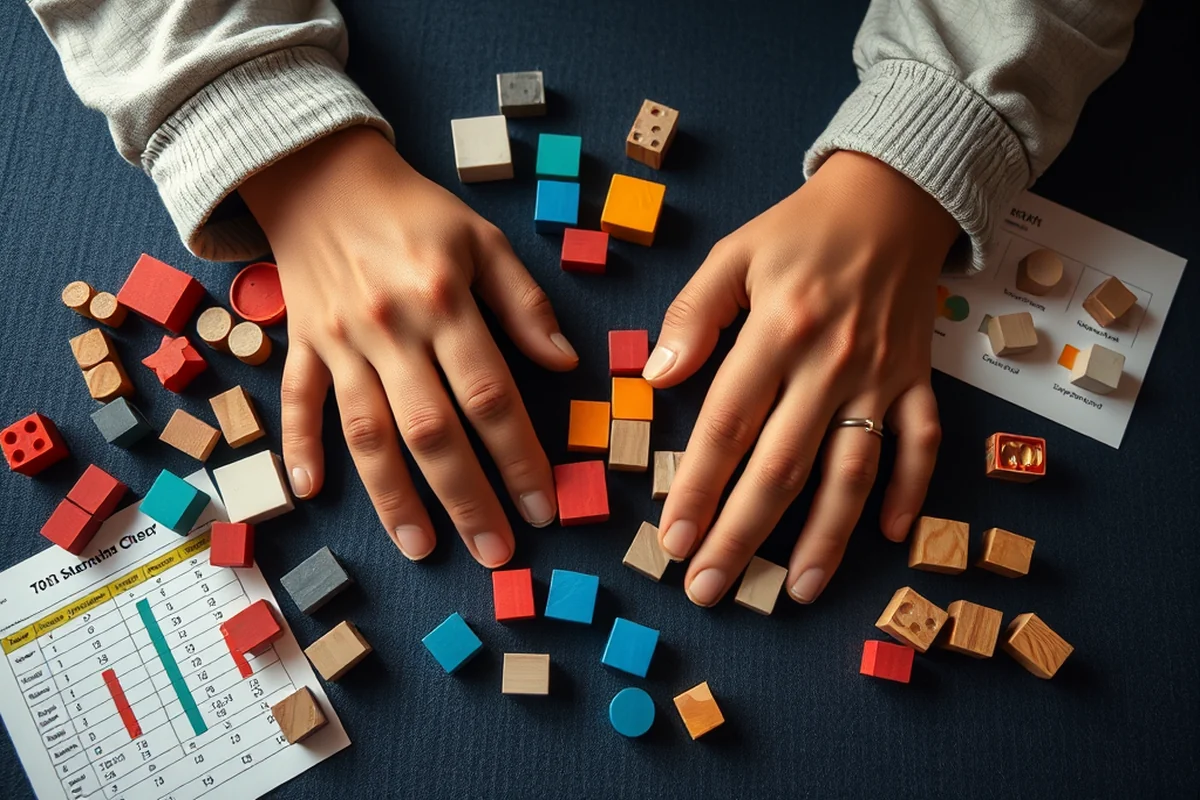
After completing the assessment, you’ll have a list of strengths and areas where your child may need more support. This is where the real value of the tool comes in — it helps you make informed decisions about your child’s learning path.
For example, if your child is struggling with reading comprehension, the assessment might suggest that you incorporate more story-based learning or spend time on vocabulary building. If they’re excelling in math, it might encourage you to introduce more advanced concepts.
The key is to use the assessment as a guide, not a rigid plan. It’s meant to help you see where your child is at — and where they need the most help — so you can adjust your teaching methods accordingly.
Related: Easy homeschool planning progress assessment
How This Assessment Helps You Stay on Track
One of the biggest benefits of this tool is that it helps you avoid the trap of constantly second-guessing your teaching methods. Instead of trying to measure every little detail, it gives you a clear picture of where your child is at and where they need more help.
I’ve found that using the assessment regularly helps me stay on top of my child’s learning without the pressure of a full curriculum review. It’s a quick check-in that keeps me focused on what matters — my child’s growth and development.
This is especially helpful for parents who are juggling multiple responsibilities — it gives you a way to measure progress without spending hours on evaluations or reports.
🧱 Younger Kids Edition
Tailored for children aged 3-6, this version uses simple questions and visuals to assess early learning milestones.
🧠 Older Kids Edition
Designed for kids aged 7-14, this version focuses on critical thinking, reading comprehension, and advanced math concepts.
📄 No-Prep Version
A quick, printable version that requires no preparation — just grab and go.
👥 Group Assessment
A version designed for group settings, such as co-ops or shared learning environments.
🎯 Extension Activities
Includes additional tips and exercises to build on the results of the assessment.
| The mistake | Why it happens | The fix |
|---|---|---|
| Using the assessment too infrequently | If you wait too long between assessments, you might miss important changes in your child’s learning progress. | Use the assessment once a month or whenever you feel like you need a quick update on your child’s learning. |
| Not adapting the questions to your child’s age or learning level | The assessment is flexible, but not using it properly can lead to inaccurate results. | Tailor the questions to your child’s current learning stage — use simpler language for younger kids and more complex prompts for older learners. |
| Trying to cover too many subjects in one session | This can overwhelm your child and make the assessment feel rushed or ineffective. | Focus on one or two key subjects during each assessment session — this gives you more accurate results and keeps your child engaged. |
| Ignoring the results | Even the best tools are useless if you don’t act on the information they provide. | Use the results to make informed decisions about your child’s learning path — adjust your teaching methods, incorporate new materials, or seek additional support where needed. |
Related: Homeschool planning assessment ideas
Quick Homeschool Planning Progress Assessment
Related: Homeschool planning progress assessment ideas
Tracking Progress Over Time with Visual Logs
Visual logs help monitor homeschool progress through clear, easy-to-update records that reflect learning milestones and areas needing attention.
I started using visual logs, like color-coded charts and digital dashboards, to track my kids’ progress over time. These tools made it easier to see patterns in their learning, such as when they were excelling in math or struggling with reading. By updating the logs weekly, I could quickly spot gaps and adjust our plan accordingly. For example, one child’s interest in science spiked after we added a monthly experiment log, which helped us tailor lessons more effectively.
I also found that visual logs kept my kids engaged. They loved seeing their progress in a tangible way, like stickers on a goal wall or progress bars in a shared online document. This not only motivated them but also gave me a clear snapshot of how each child was doing compared to their goals. I could identify when they were ahead or falling behind, which helped me balance their workload without overwhelming them.
Using these logs also made it easier to communicate with other educators or tutors we occasionally brought in. We could quickly show them where we were, what we had covered, and where we needed support. This saved time and made planning more efficient. Over time, I noticed that the visual logs became a central part of our homeschool routine, helping us stay focused and aligned with our learning objectives.
Common Questions
Can I use this assessment with a child who has special needs?
How often should I use the Quick Homeschool Planning Progress Assessment?
Do I need any special materials to complete the assessment?
Is this assessment aligned with any curriculum standards?
References
- Special Education Glossary - Chicago Public Schools (cps.edu)
- Rhode Island - Johns Hopkins Homeschool Hub (education.jhu.edu)
- A Handbook for Homeschoolers - IdeaExchange@UAkron (ideaexchange.uakron.edu)
- The Fundamentals of Lesson Planning - Biola LEARN (learn.biola.edu)
Cite this guide
Plannedathome (2026). Quick Homeschool Planning Progress Assessment. https://plannedathome.com/quick-homeschool-planning-progress-assessment/
Feel free to cite or share this guide.